
By Dr. J. Emanuel Hodge
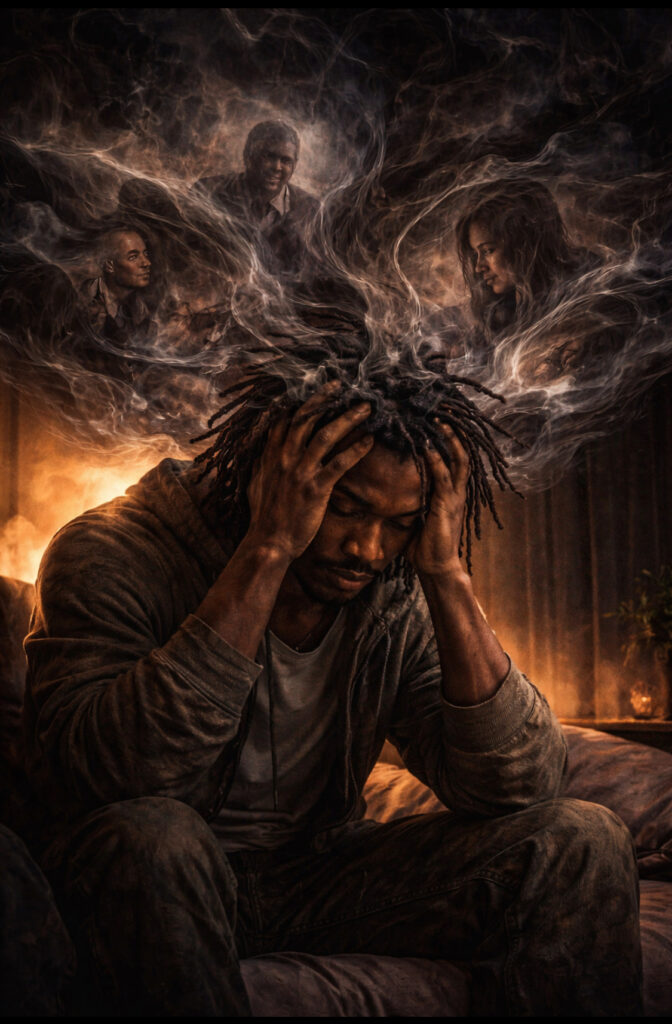
When Pain Becomes Perception
By Dr. J. Emanuel Hodge
We do not meet each other empty.
We arrive carrying memory in the body, stories in the mind, and impressions shaped long before the present moment ever began. We bring our fears, our hopes, our past wounds, and our learned defenses into every interaction—often without realizing how much of what we feel is not being created now, but remembered now.
This is part of being human.
And it is also where confusion begins.
Because while pain is real, and abuse is real, not every painful or intense experience is evidence of present harm.
That distinction matters.
Abuse, as I understand it, is physical, mental, or emotional harm that is intentionally and consistently inflicted over time. It is also the deliberate manipulation of perception—causing someone to believe something false in order to damage another person’s integrity, safety, or reality.
That is real.
And it should never be minimized.
But there is another layer to human experience that is often overlooked.
The body remembers.
The nervous system does not operate strictly in the present. It responds to patterns, to associations, to stored experiences that may have never been fully processed or released. In moments of stress, intimacy, vulnerability, or even healing, those stored experiences can rise to the surface with intensity.
A person can feel fear without present danger.
They can feel violation without present violation.
They can feel overwhelmed not because of what is happening—but because of what is being remembered.
The feeling is real.
But the interpretation of the feeling still requires care.
This is where discernment becomes essential.
Because not everything that feels uncomfortable is abuse.
Not every activation is harm.
Not every moment of tension is wrongdoing.
Sometimes it is discomfort—the kind that comes with growth, unfamiliarity, or truth confronting what we would rather not see.
Sometimes it is a trigger—an echo of something that once was, resurfacing in the now.
Sometimes it is misalignment—two people not fully meeting each other in clarity or understanding.
And sometimes, yes, it is harm.
But when all of these experiences are collapsed into one category, something important is lost.
We lose our ability to discern.
And without discernment, we begin to react rather than reflect.
We begin to label before we understand.
We begin to assign intent before we examine perception.
We begin to move through the world not from clarity, but from conditioned response.
This is not a judgment. It is an observation.
Because many of us are carrying wounds that were never meant to be carried alone. Experiences that shaped how we see, how we feel, and how we interpret others—often without our conscious participation.
And if those experiences remain unexamined, they do more than stay with us.
They begin to shape how we engage the present.
Sometimes subtly.
Sometimes powerfully.
At times, pain can become so integrated into identity that it influences not only how we protect ourselves—but how we perceive others. We may begin to expect harm, to anticipate it, to interpret ambiguity through the lens of past experience.
And in doing so, we may unintentionally recreate the very conditions we are trying to avoid.
This does not make someone wrong.
But it does invite responsibility.
Healing is not the denial of pain.
It is the willingness to examine it.
It asks us to slow down long enough to question:
Is what I am feeling coming from this moment?
Or is this moment awakening something I have not yet resolved?
Is my reaction aligned with what is happening?
Or with what I have lived before?
Am I responding to this person?
Or to a memory of someone else?
These are not easy questions.
But they are necessary ones.
Because human interaction is shared space.
It requires not only awareness of others—but awareness of self.
It asks for communication:
“If I feel uncomfortable, I say it.”
It asks for clarity:
“If I am uncertain, I ask.”
It asks for honesty:
“I do not assume what has not been expressed.”
And it asks for humility:
“I may not be seeing this fully.”
This is what creates clean interaction.
Not perfection.
Not constant agreement.
But presence, responsibility, and a willingness to engage without collapsing everything into fear or defense.
Compassion must remain at the center of this conversation.
For those who have experienced real harm, their pain deserves acknowledgment, care, and support.
And at the same time, compassion must extend to truth.
Because when every discomfort is labeled as abuse, we risk losing the language needed to identify actual harm. When every intense feeling becomes unquestioned proof, we lose the ability to reflect. And when perception is never examined, it can become distorted in ways that affect not only ourselves—but others.
This is not about blame.
It is about balance.
The balance between honoring what is felt
and examining what is true.
The balance between validating experience
and questioning interpretation.
The balance between protecting oneself
and remaining open to reality as it is.
We are not meant to live trapped in our past.
Nor are we meant to ignore it.
We are meant to become aware of it—
to understand how it moves through us,
and to decide, consciously, what we carry forward.
Because where focus goes, energy flows.
What we continually reinforce—whether fear or freedom—shapes the life we experience.
And at some point, healing asks something deeper of us:
Not just to feel.
Not just to react.
But to see clearly.
To recognize that not every wound belongs to the present.
And not every feeling, on its own, defines the truth of what is happening.
Pain deserves compassion.
But perception deserves examination.
And wisdom lives in knowing the difference.
Because perception, as immediate and convincing as it feels, is not always neutral. It is shaped—quietly, consistently—by memory, by fear, by past experiences that have not yet found resolution. What we see is often filtered through what we have lived. What we feel is often amplified by what we have carried.
And if we do not pause to examine that, we can move through the world reacting to echoes instead of responding to what is actually present.
I had to learn this in a very real way.
There was a time when I would enter spaces with intensity—focused, direct, grounded in what I was doing. To me, it felt like clarity. It felt like presence.
But I began to notice that not everyone experienced me that way.
Some felt intimidated.
Some felt uncomfortable.
Some interpreted my presence as something it was not.
At first, it was easy to feel misunderstood—to say, “That’s not me.”
And in many ways, that was true.
But it wasn’t the full truth.
Because while I knew my intention, I had not yet taken responsibility for how I was being received.
So I asked myself a different question:
Not just “Am I right?”
But “How am I being experienced?”
That question changed something.
Not because I needed to shrink.
But because I needed to see more.
To recognize that perception is not created in isolation—it is shaped in relationship.
And just as I had to become aware of how I was received…
I also came to understand something else:
There are times when what is being received is not coming from me at all.
It is coming from memory.
From fear.
From something unresolved that has found a place to land.
And when that is not examined…
it does more than create misunderstanding.
It can create damage.
Reputations can be altered.
Intentions can be rewritten.
Trust can be broken—not because of what was done, but because of what was believed.
And that is a difficult truth.
Because it means that while pain deserves compassion…
perception still requires responsibility.
Not to invalidate what is felt—
but to understand it more deeply.
To ask:
Is this moment the source…
or the trigger?
Is this person the cause…
or the mirror?
Am I responding to what is happening…
or to what I have not yet released?
Because without those questions, we risk turning every discomfort into danger…
every misalignment into harm…
every unfamiliar experience into something that must be defended against.
And in doing so, we don’t just protect ourselves—
We limit our ability to connect, to grow, and to see clearly.
Wisdom, then, is not found in choosing between feeling and truth.
It is found in holding both.
In honoring the experience…
while still examining the interpretation.
Because not every wound belongs to the present.
And not every feeling, on its own, defines what is real.
Pain deserves compassion.
But perception—
perception deserves courage.
The courage to look again.
The courage to question ourselves.
The courage to separate memory from moment.
And in that space—
clarity becomes possible.
