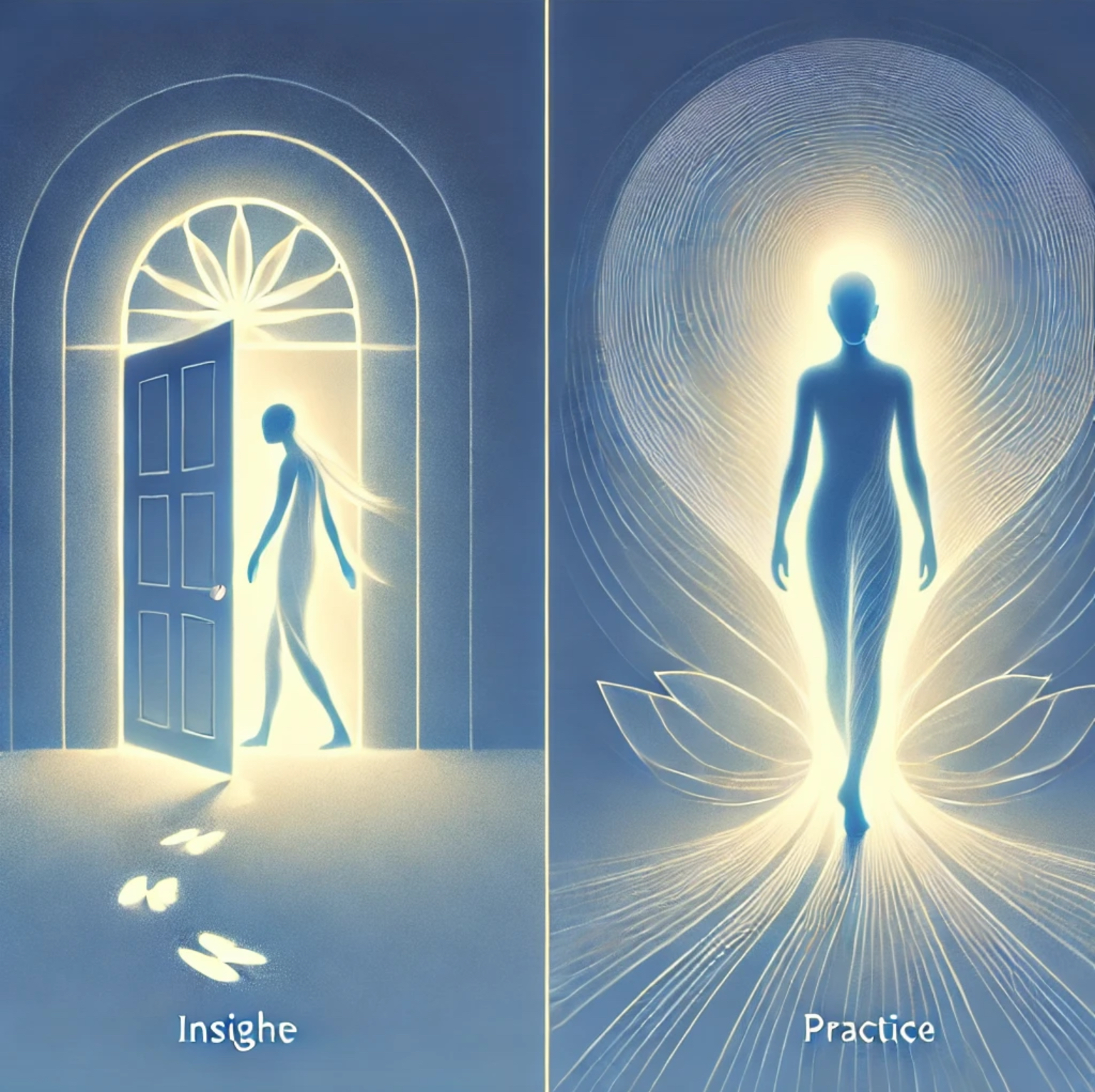
“Three days can carry you away — three minutes can bring you back.”
Understanding the Threshold of Momentum
There is something important about the number three.
Not as superstition.
Not as mysticism.
But as lived experience.
Many people notice a similar pattern in their lives without realizing it.
Miss one day of a positive habit, and nothing really changes.
Miss two days, and you feel a small interruption.
But somewhere around the third day, something shifts.
The practice no longer feels automatic.
The rhythm disappears.
What felt natural begins to feel optional.
And once that shift happens, time begins to move differently.
Three days becomes three weeks.
Three weeks becomes three months.
Not because we chose to abandon our direction — but because momentum quietly changed.
Three days often marks the point where momentum stops carrying us forward and begins carrying us somewhere else.
The Nervous System Remembers Patterns
The human system is built on patterns.
The body learns rhythms.
The mind learns routines.
The nervous system adapts to repetition.
When we repeat something daily — meditation, movement, writing, reflection — the body begins to expect it. The action becomes easier because it becomes familiar.
Over time, alignment begins to feel natural.
But the same principle works in reverse.
When a pattern stops, the system adjusts.
The body relaxes its expectation.
The mind stops preparing.
The rhythm fades.
After a few days, the practice begins to feel distant instead of immediate.
It is not lost.
It is simply no longer active.
Three days is often long enough for the system to begin reorganizing around a different pattern.
This is why returning after a short break feels easy — but returning after a long break feels difficult.
The difference began much earlier than we realized.
Momentum Works Both Directions
Most people think momentum only exists when we are doing well.
But momentum works in both directions.
There is momentum toward growth.
And there is momentum toward stillness.
Neither is inherently good or bad.
They are simply directions.
Intentional action builds forward movement.
Inattention allows the system to settle into what is easiest.
Without small acts of engagement, the current of daily life takes over.
Schedules fill the space.
Responsibilities take priority.
Energy follows convenience.
Eventually we find ourselves reacting to life rather than participating in it consciously.
This is not failure.
It is physics.
Life moves where energy flows.
And energy follows attention.
The Disappearance of Intention
One of the first things to fade after a few days is not the practice itself.
It is the intention behind it.
The desire to sit quietly becomes weaker.
The motivation to move the body feels distant.
The impulse to write or reflect grows quieter.
We may still believe in what we are doing.
But belief without engagement becomes memory.
This is why the moment of noticing is so important.
The realization:
“I haven’t done this in days.”
Is actually a moment of awakening.
It is awareness returning to the surface.
And awareness is the doorway back.
Three Days Is a Threshold
Three days is not magical.
But it is meaningful.
It is long enough for the nervous system to shift.
Long enough for routines to loosen.
Long enough for awareness to dim.
Yet short enough that return is still easy.
That is why the third day matters so much.
It is the threshold between pause and drift.
Before three days, we are resting.
After three days, we are redirecting.
Recognizing that threshold allows us to intervene early.
Instead of waiting until months have passed, we can return while the path is still familiar.
The Gentle Return
Understanding the three-day threshold changes how we approach discipline.
Instead of forcing ourselves to be perfect, we simply stay aware of the pattern.
If a day passes without alignment, we notice.
If two days pass, we gently prepare to return.
If three days approach, we interrupt the drift.
Not with pressure.
Not with guilt.
But with a simple act of awareness.
Sit.
Breathe.
Return.
Small actions restart momentum.
Momentum restores direction.
Direction restores purpose.
Direction Is Always Available
The encouraging truth is that the same principle that allows us to drift also allows us to return.
Three days can change direction away from alignment.
But a single intentional moment can change direction back again.
Momentum does not require force.
It only requires beginning.
One breath can begin the return.
One quiet minute can begin the return.
One intentional act can begin the return.
And once movement begins again, the path becomes familiar once more.
The Three-Day Awareness Practice
One simple practice is to periodically ask yourself:
“When was the last time I aligned myself intentionally?”
Not judged.
Not analyzed.
Simply noticed.
If it has been less than three days, you are still within the rhythm.
If it has been longer, the return is waiting.
Alignment is never far away.
It begins the moment we become aware again.
A Simple Truth
Three days does not change who we are.
But it often changes our direction.
And direction determines where we arrive.
Small moments of awareness prevent long periods of drift.
Sometimes the difference between living intentionally and living unconsciously is nothing more than recognizing when three days have passed — and choosing to return.
____Dr. J Emanuel Hodge