Movement as Medicine

Restoring Flow Through Intentional Motion
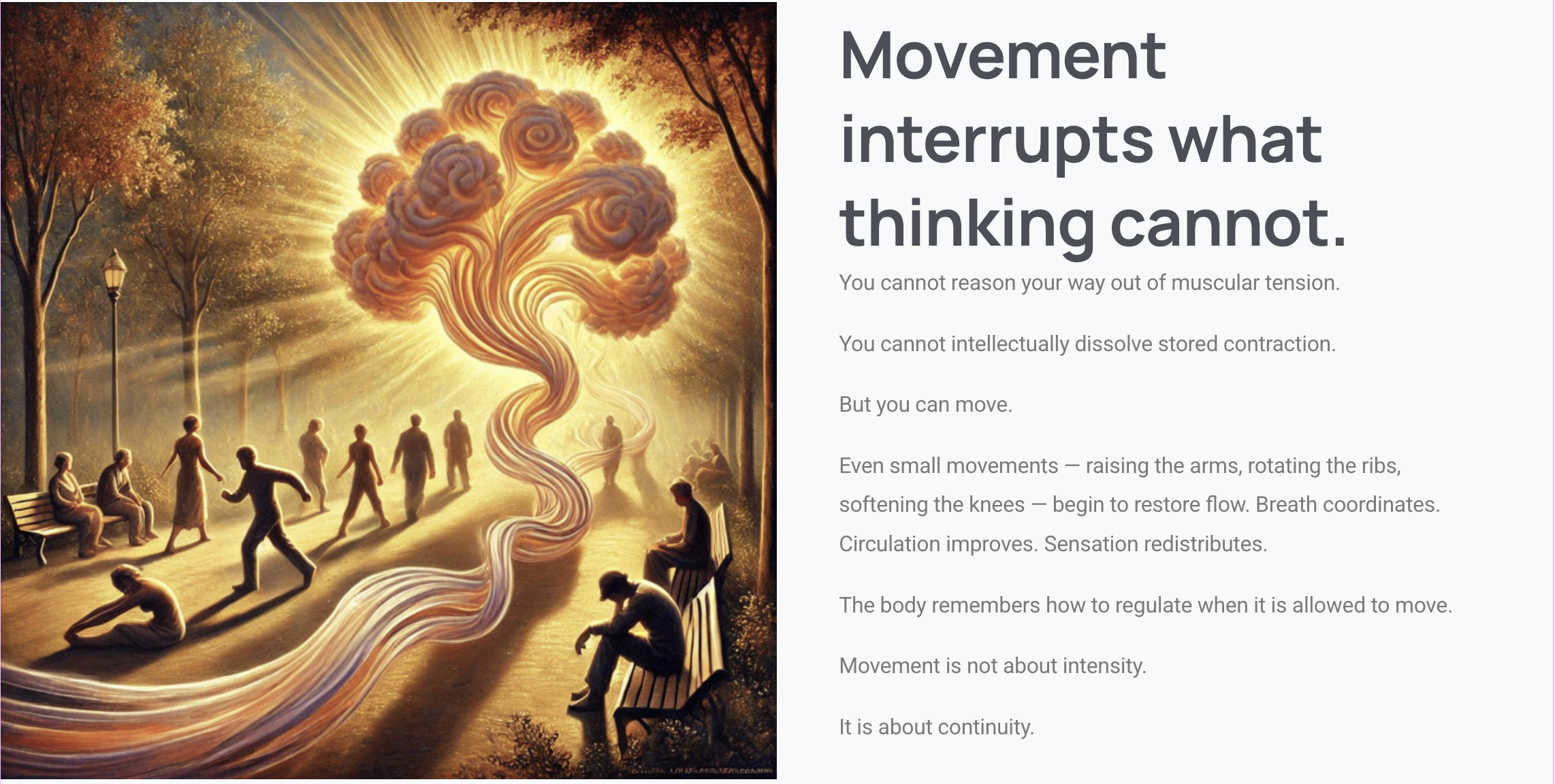
Movement Is Not Exercise Movement is not the same as exercise. Exercise is scheduled, measured, and often goal-oriented. Movement is continuous. It is the body’s native language. The body is designed for motion. Circulation depends on it. Joint health depends on it. Emotional regulation depends on it. Even clarity of thought improves when the body is allowed to shift. When movement decreases, stagnation begins — often quietly. It may first appear as subtle tightness in the shoulders. A locked jaw. A stiffness when standing after sitting too long. Over time, stagnation is not only structural; it becomes emotional. Irritation lingers. Thoughts repeat. Fatigue deepens without clear cause. What has often stopped is not motivation — but motion.
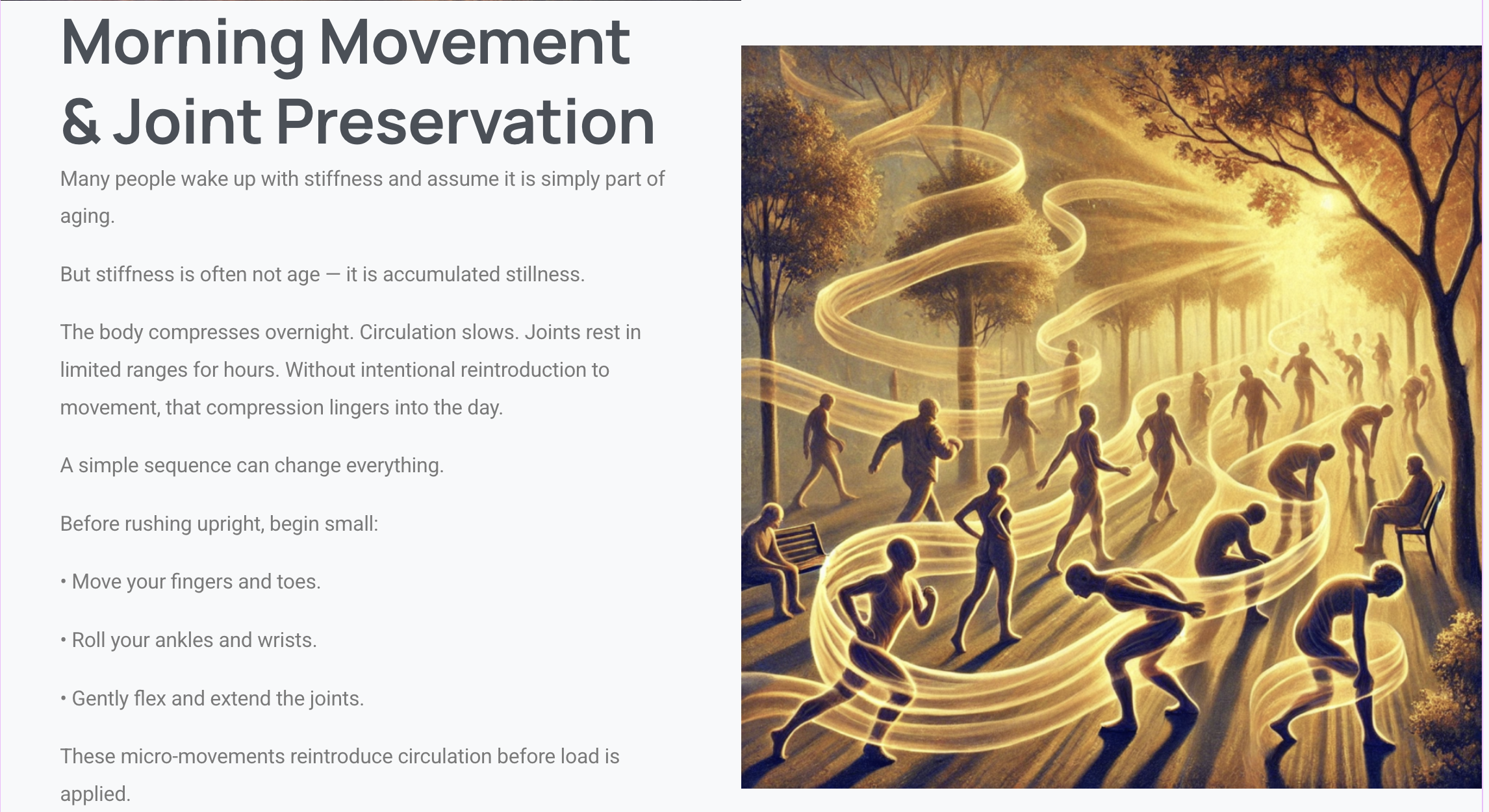
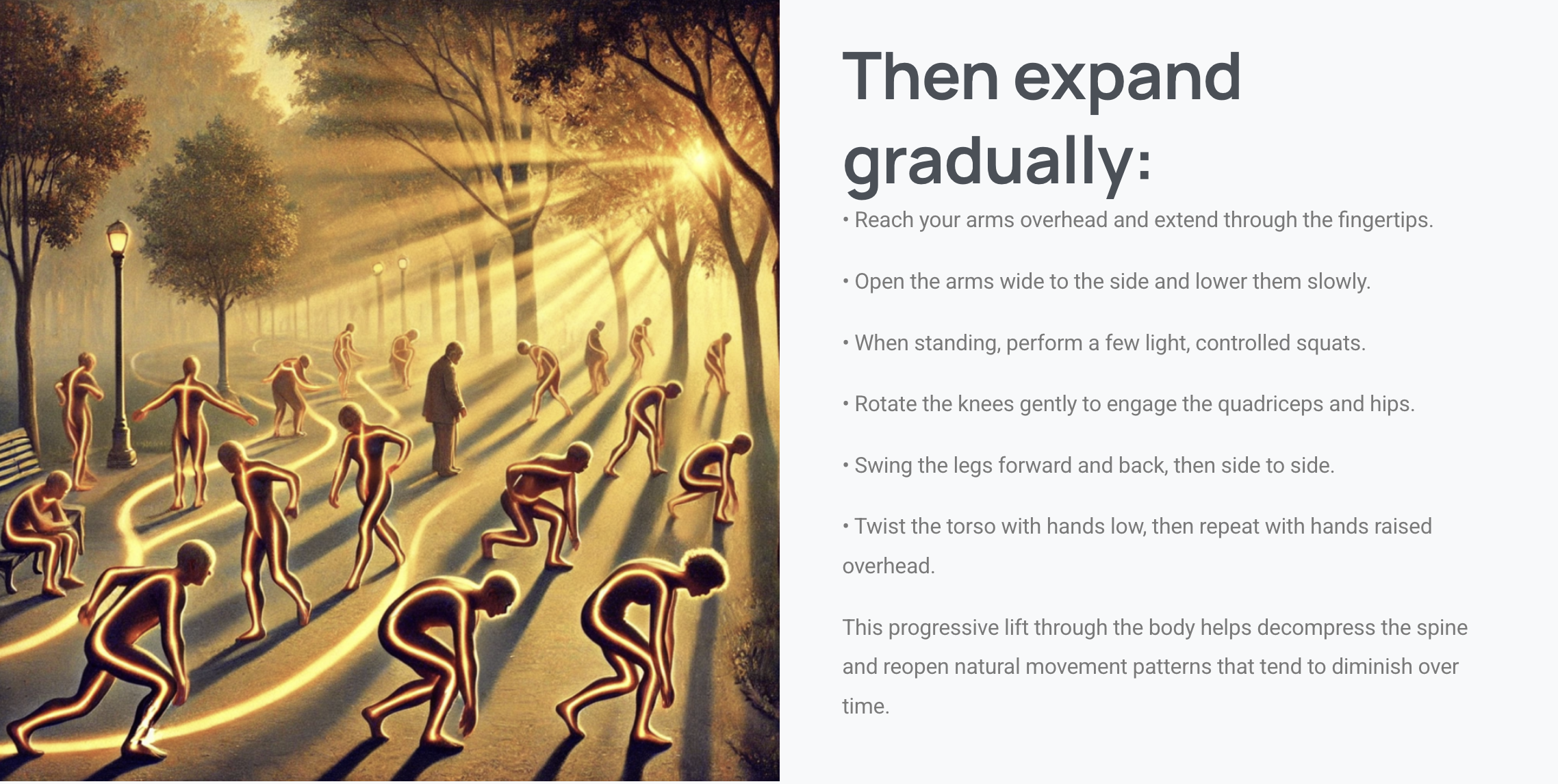
One common pattern I’ve observed is this: as people age, they stop regularly raising their arms above their head. Over time, that limitation can contribute to shoulder restriction, supraspinatus irritation, and eventually what is commonly referred to as frozen shoulder. The issue is not age. It is range neglected. Joints thrive on intentional movement. It is not intensity that preserves function — it is continuity. When breath is incorporated, movement becomes coordinated rather than forced. When hydration is maintained, tissues respond with greater elasticity and resilience. Move intentionally. Breathe with movement. Hydrate consistently. Small daily motion prevents large future restriction.
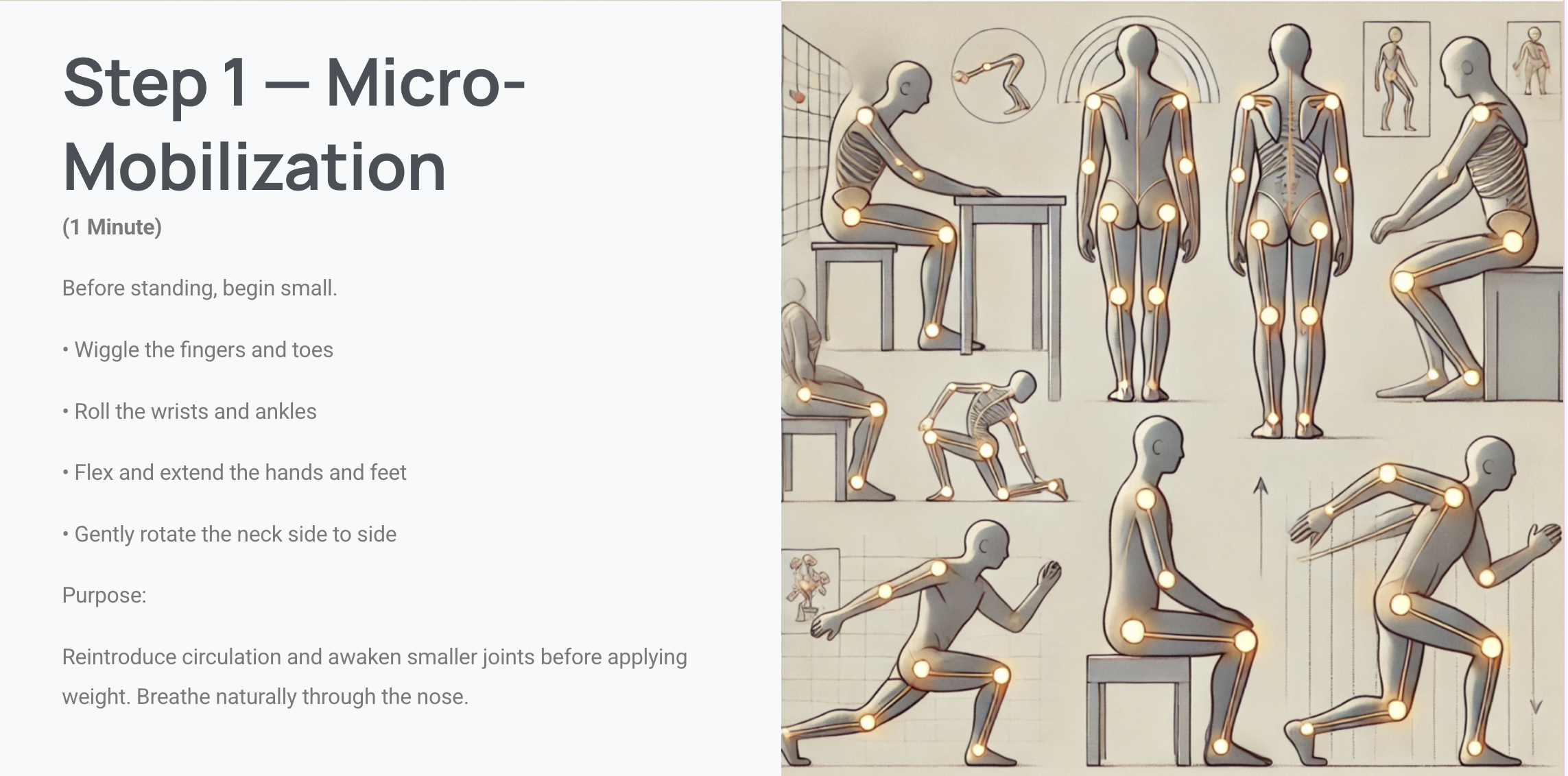
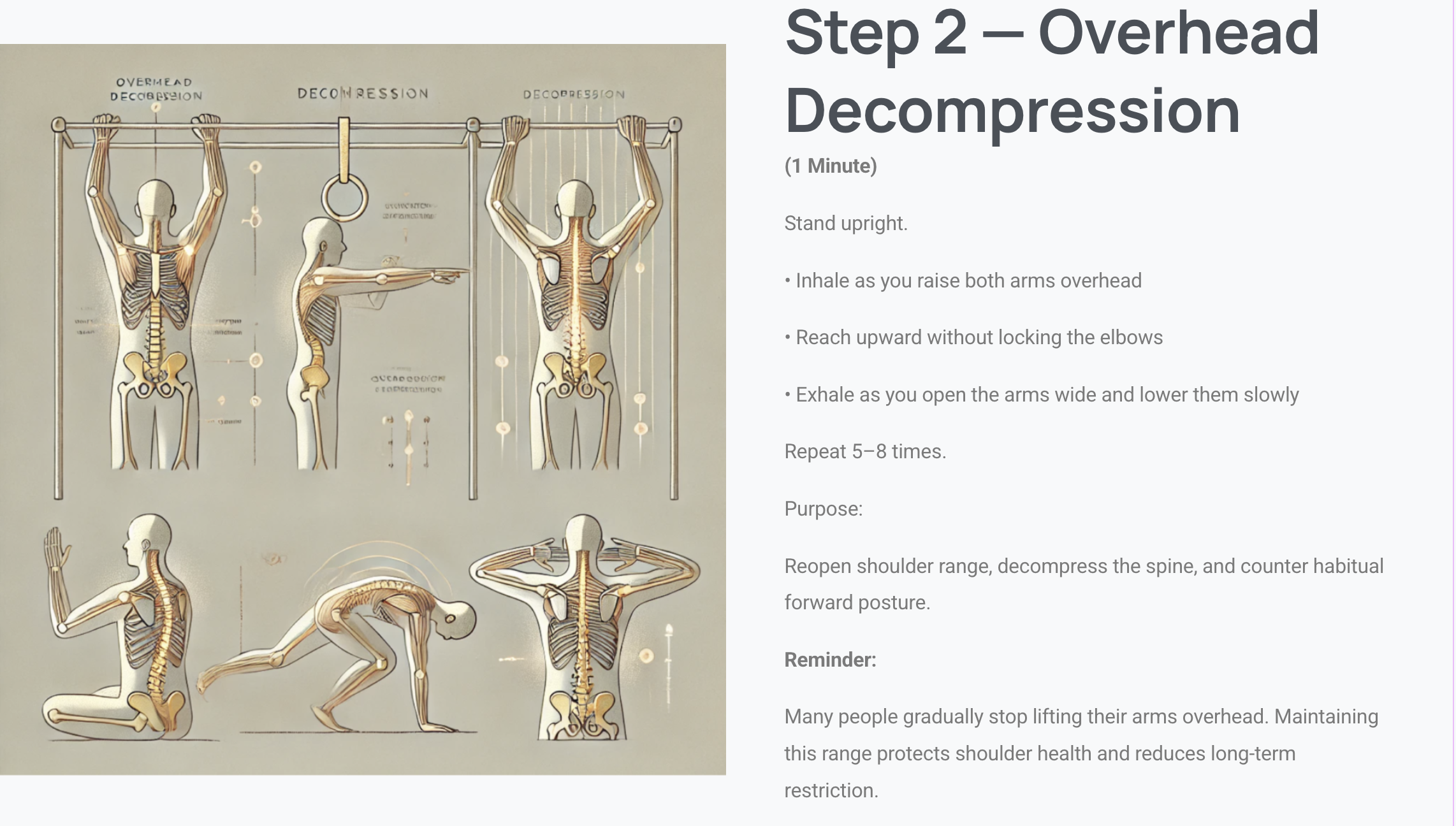
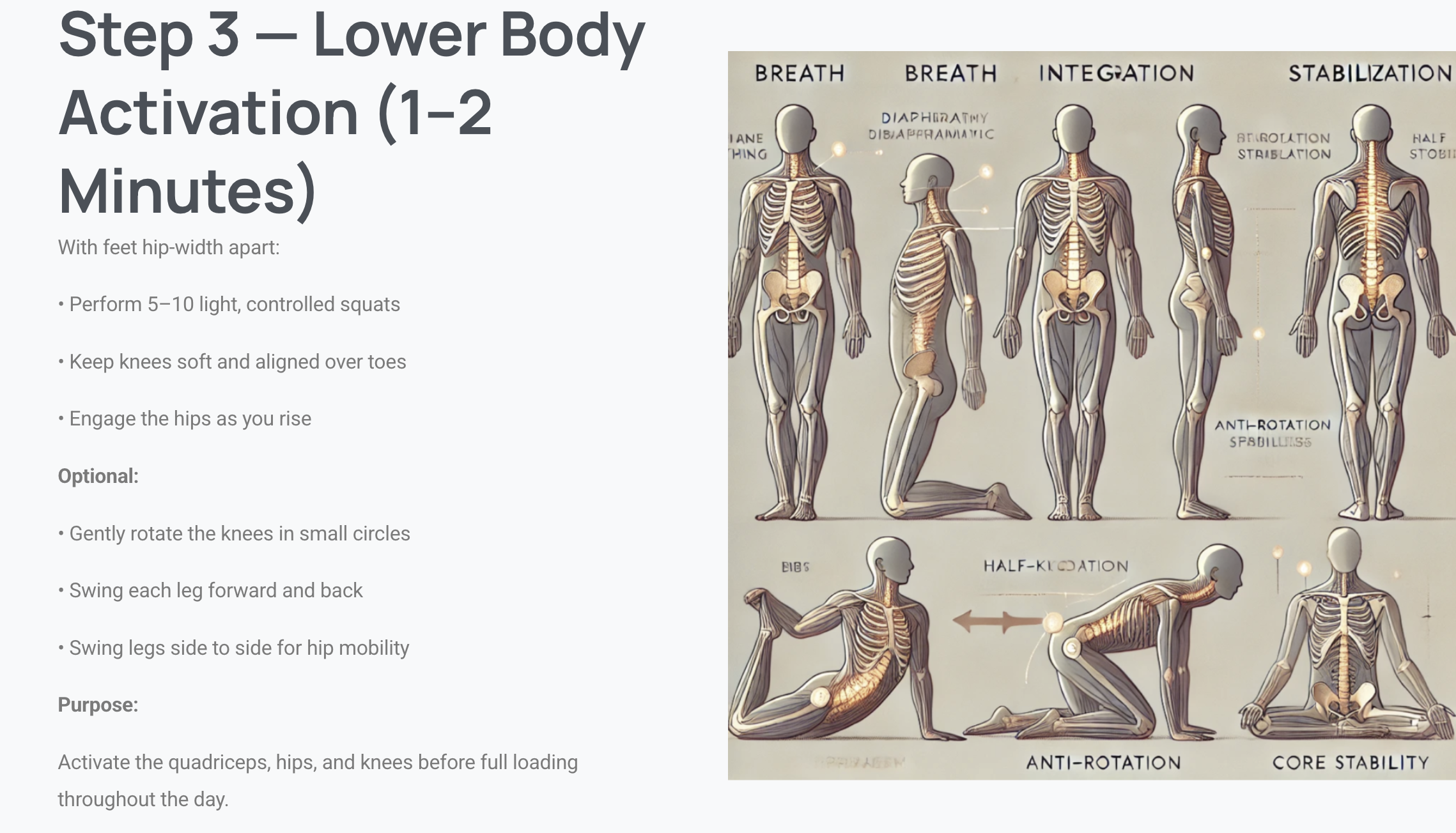
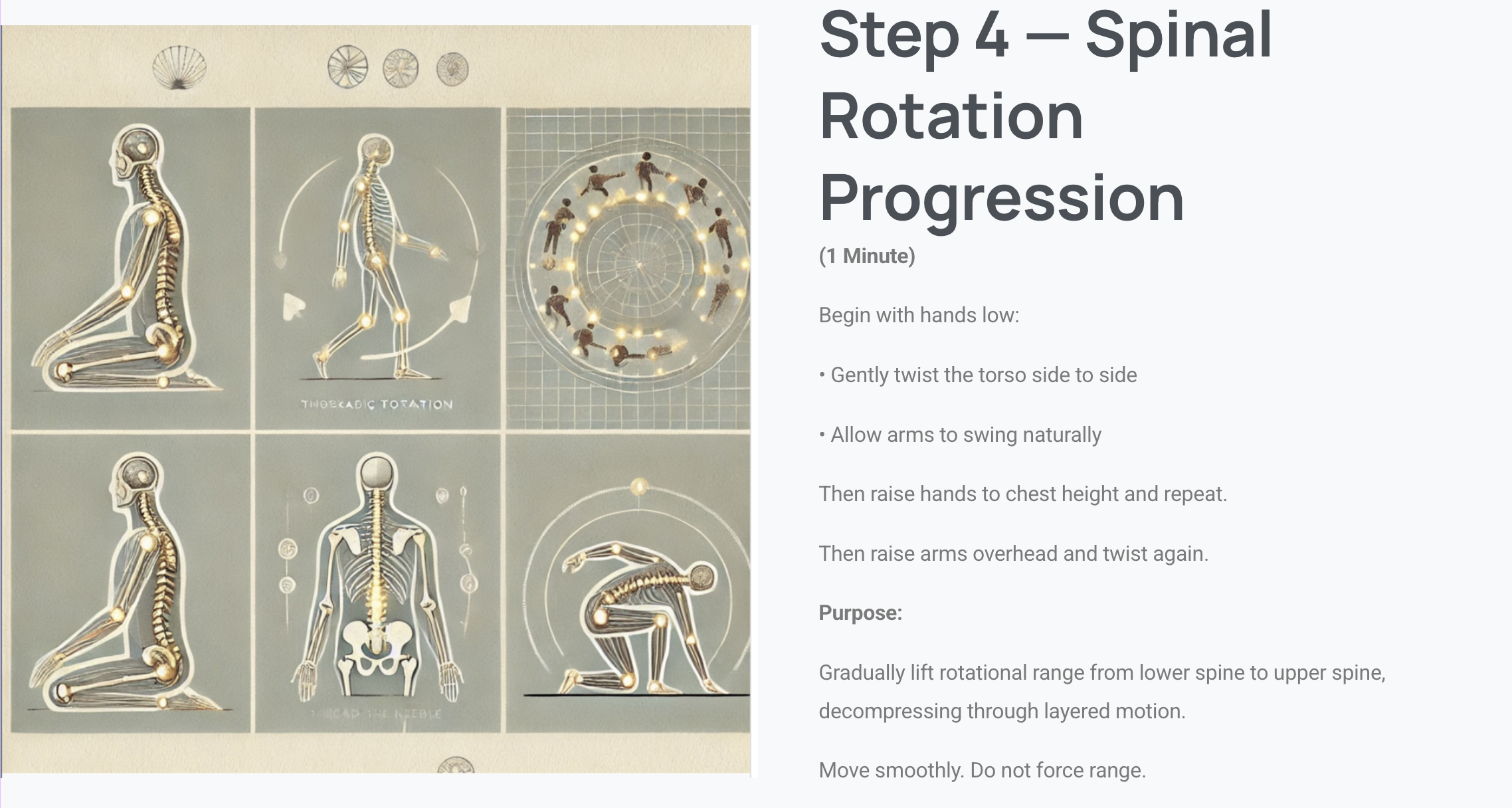
Why This Matters
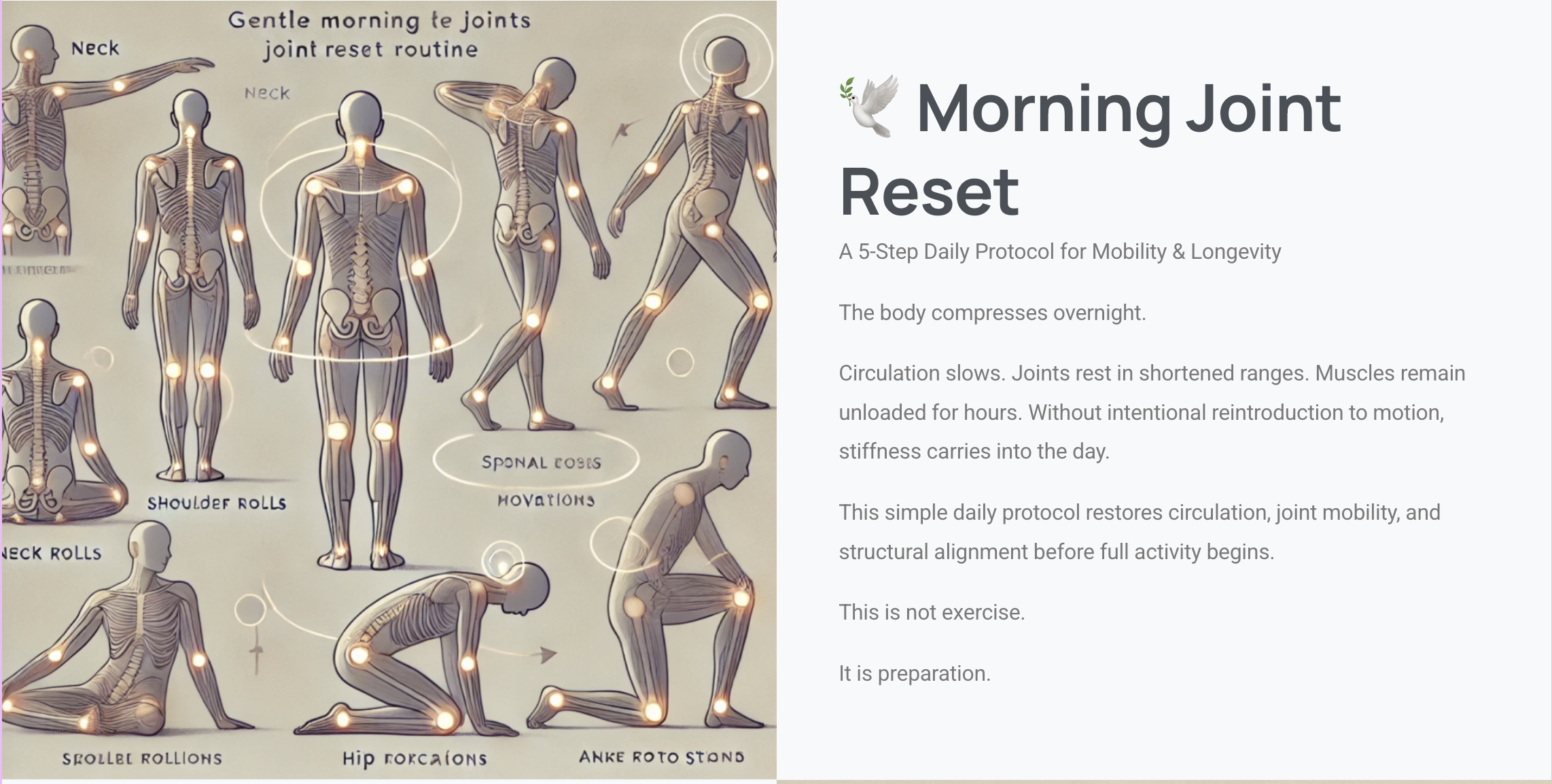
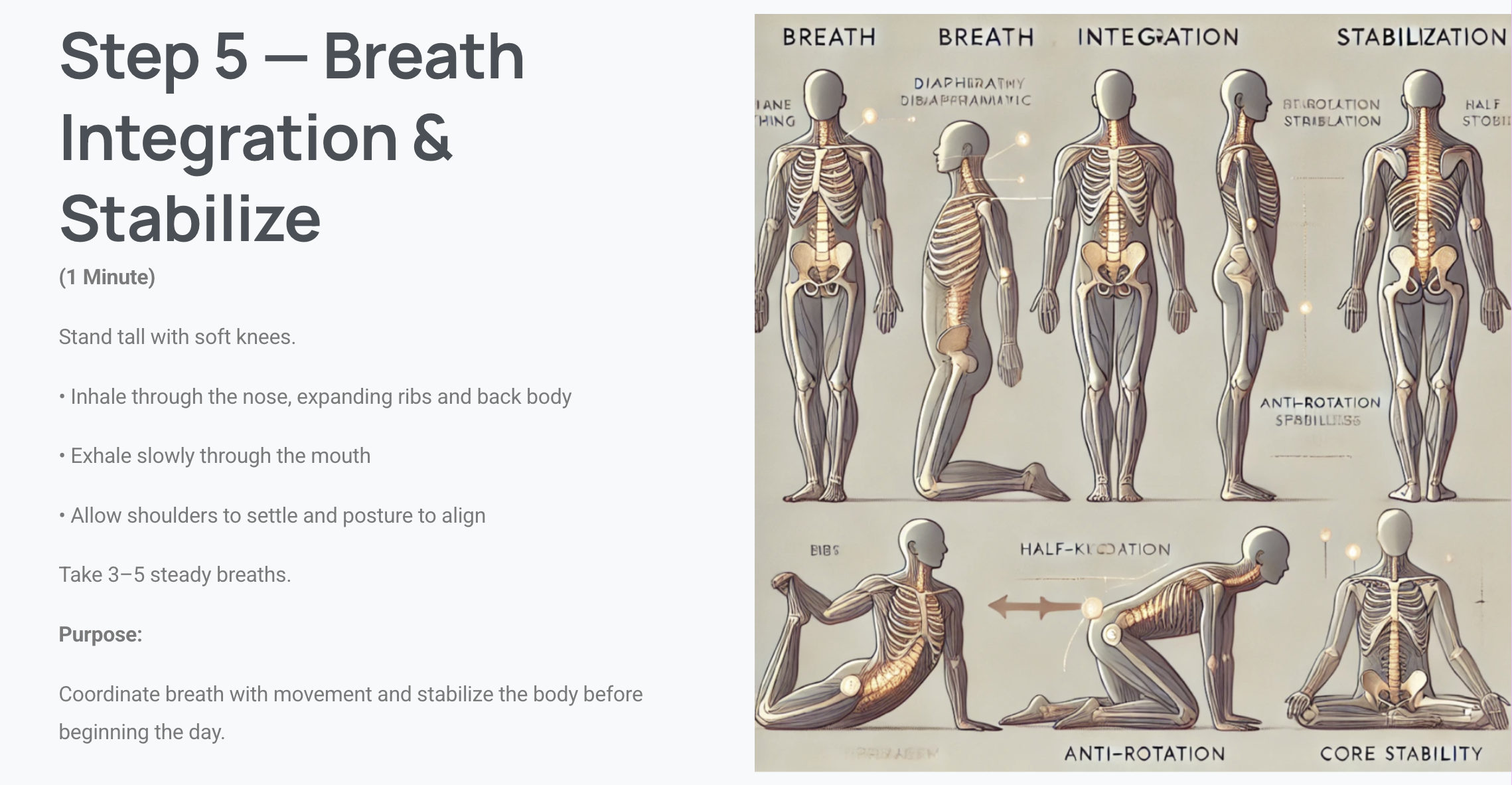
Stiffness is not simply age. It is often unaddressed compression. Joints thrive on regular, intentional movement. Mobility maintained daily prevents larger dysfunction later. When breath and hydration are included, tissues respond with greater elasticity and resilience. Move consistently. Breathe deliberately. Hydrate intentionally. Small daily motion preserves long-term function.
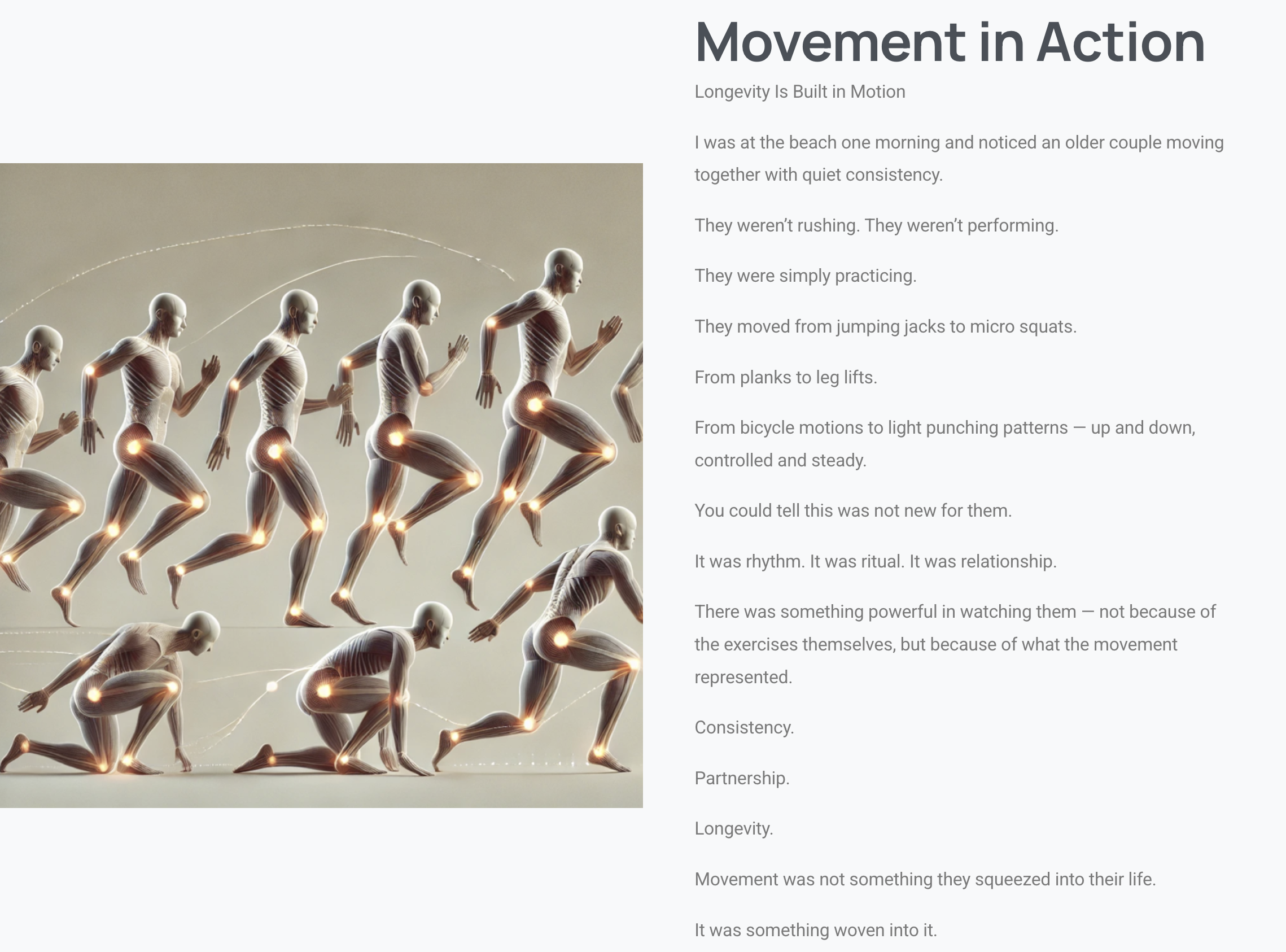
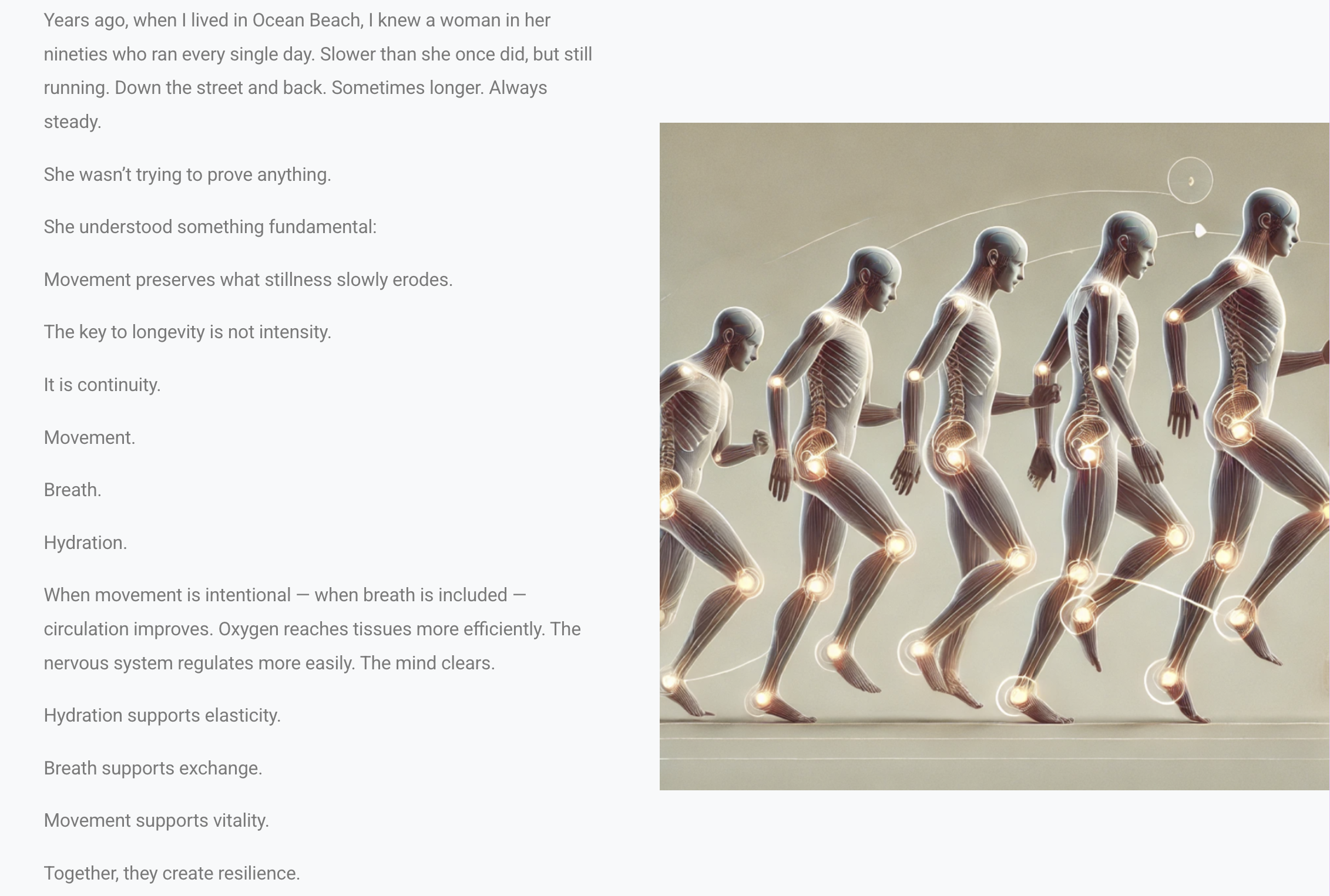
Movement in nature amplifies this effect. Open air. Light exposure. Ground contact. Rhythmic motion. All of it encourages adaptability within the system. We often speak about age-related degeneration as if it is inevitable and uniform. While time moves forward for all of us, decline is not solely determined by years. It is shaped by use. The body responds to what it practices. Intentional movement — even modest movement — stimulates circulation, supports cognitive function, and reinforces coordination patterns that protect both body and mind. Not random motion. Not frantic activity. Intentional movement. With breath. With awareness. Longevity is rarely dramatic. It is built quietly, in small daily repetitions. Continuity protects what intensity cannot.