

Breath as the Bridge Connecting Awareness to Action

Between awareness and action, there is breath. Before movement happens, breath happens. Before reaction takes form, breath shifts state. We often treat breath as background—something that happens automatically while attention is placed elsewhere. Yet breath is one of the few processes that lives at the intersection of the conscious and unconscious. It responds to thought, emotion, posture, and environment—while also shaping them. Breath does not require belief. It requires participation. You do not have to agree with a concept or adopt a new perspective for breath to begin shifting a state. Breath responds to presence, not persuasion. When awareness alone is not enough—when noticing doesn’t lead to change—breath becomes the bridge. It translates understanding into sensation, and sensation into response. Through breath, the body is given permission to reorganize itself.


Emotional Release Without Storytelling
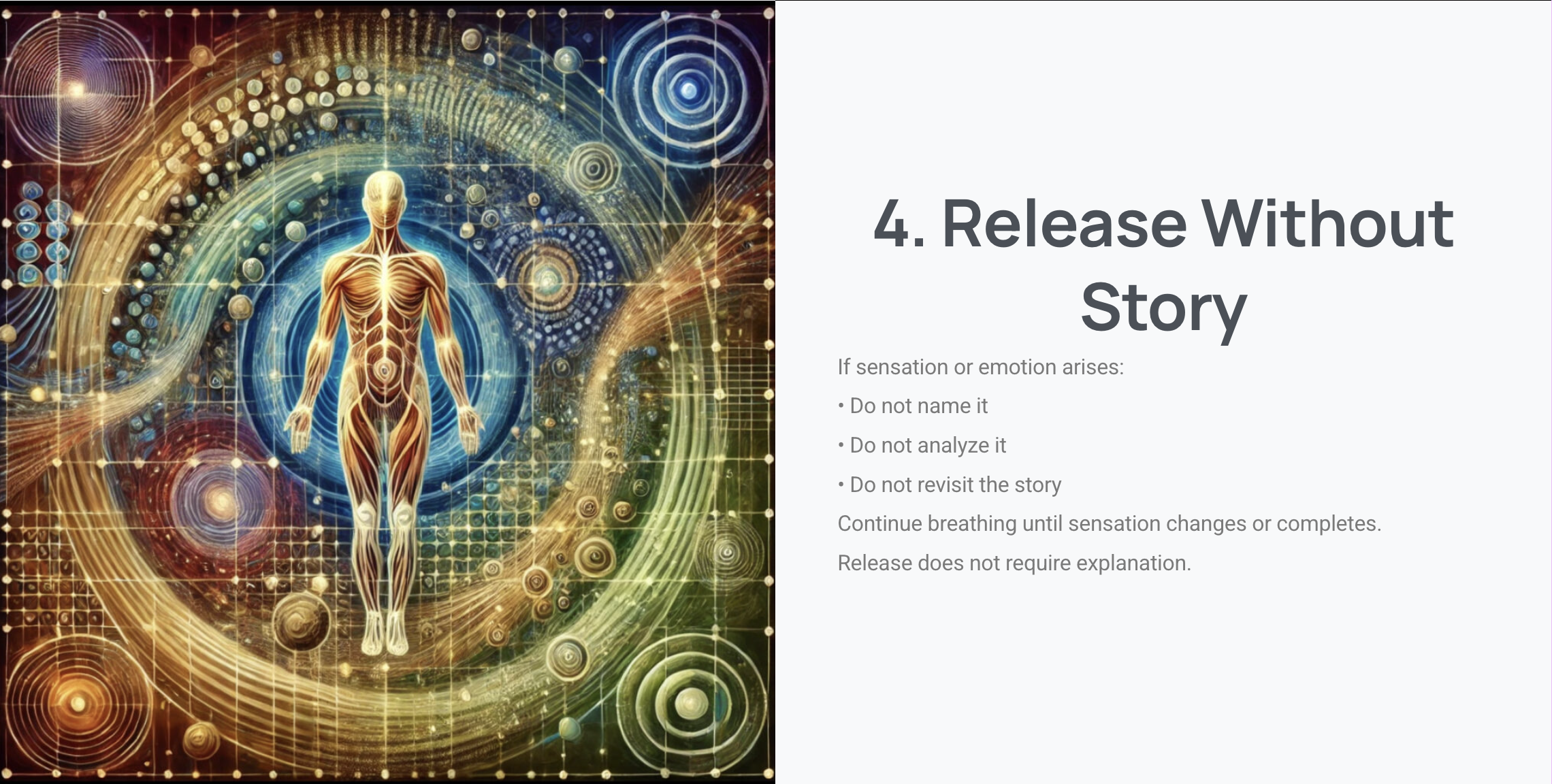
One of the most overlooked capacities of breath is its ability to allow emotional release without requiring narrative. Emotion does not need to be explained in order to move. The body does not need a story to let go. What it needs is space. In moments of tension, focus, or distraction, we often stop breathing fully without realizing it. The breath becomes shallow, fragmented, or held. This is not a failure—it is a natural protective response. When the body senses discomfort, uncertainty, or strain, breath tightens as a form of bracing. Release begins when that bracing softens. Choosing to breathe more fully—especially into the ribs, back body, and lower abdomen—creates the internal space needed for sensation to shift. As breath deepens naturally, tension patterns begin to loosen. Sensation moves. Emotion is allowed to pass through the body without being reinforced or organized by thought. This is not suppression. It is completion. The exhale plays a particularly important role. In discomfort, the natural exhale often becomes defensive—short, guarded, or abrupt. When the exhale is consciously extended, or gently voiced as a soft “haa”, the body receives a signal of safety. The nervous system recognizes that it no longer needs to hold. This kind of release does not require force. It requires permission. Intentional breathing—especially attentive exhalation—allows emotion to complete its cycle without becoming identity, memory, or narrative. What moves through does not need to be carried forward. Breath gives the body a way to finish what it has already begun.entity.

Breath for Fatigue, Overwhelm, and Recalibration
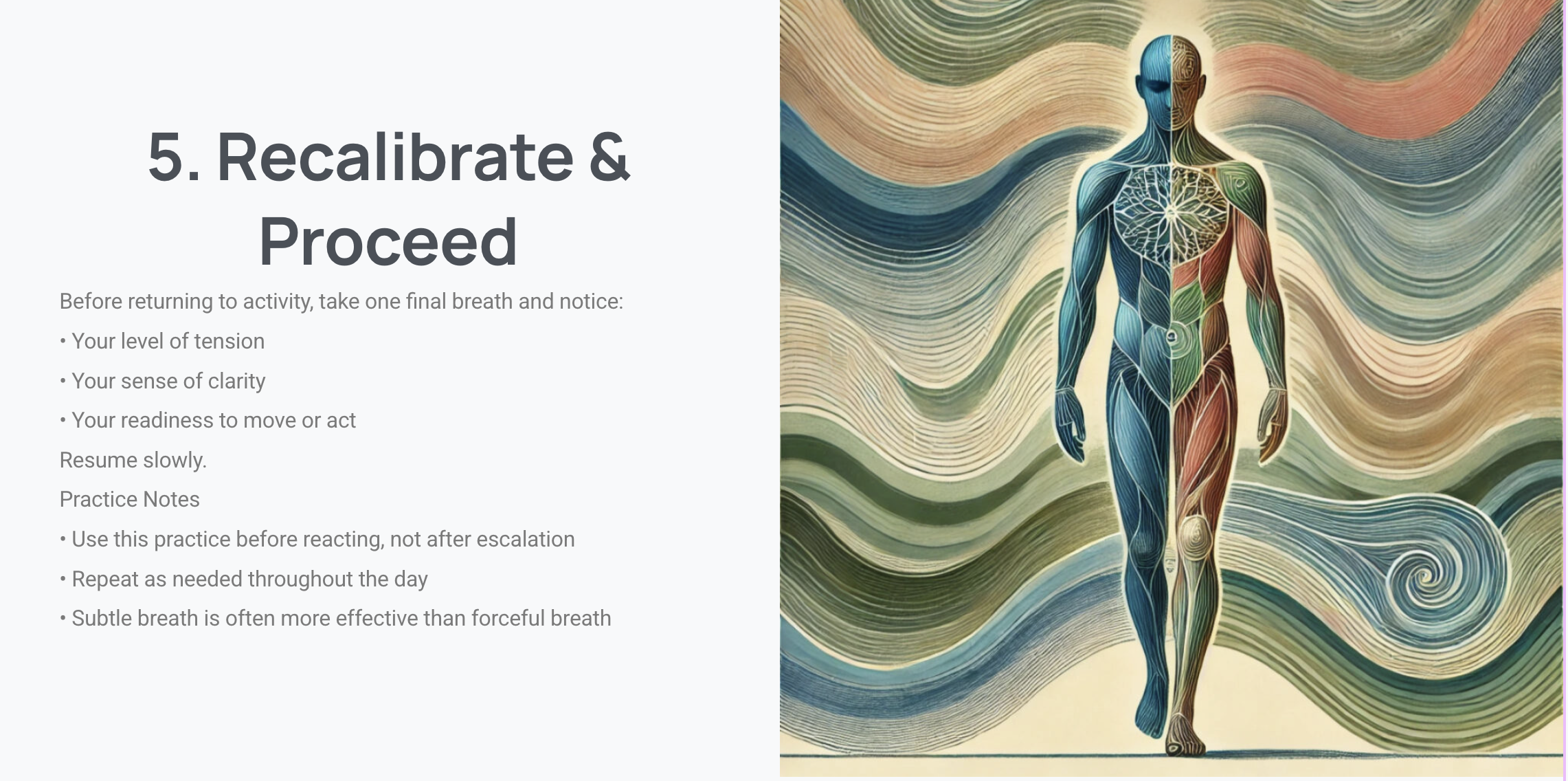
Fatigue is often not a lack of energy—it is a sign that breath has become shallow, interrupted, or restricted over time. Overwhelm frequently appears when breath has faded so far into the background that it is no longer consciously felt at all. In these moments, the goal is not to fix the situation or solve the problem. The goal is to recalibrate the system. Recalibration through breath is simple, but not superficial. It begins by restoring rhythm. Breathing in and out through the nose helps rebuild internal energy and steadiness. Nasal breathing supports continuity, focus, and coherence. It signals the body to gather itself. When tension, emotion, or agitation is present, allowing the exhale to release through the mouth helps discharge excess activation. A soft, unforced mouth exhale invites letting go. It tells the nervous system that it is safe to soften. Simple recalibration through breath may include: • Gently slowing the exhale • Allowing breath to expand into the back body and ribs • Letting breath set the pace of movement rather than pushing through • Pausing long enough to feel a real shift before continuing Even a single conscious breath—taken with awareness—can interrupt a cascade of reaction. When practiced repeatedly, breath stops being something we reach for only in moments of distress. It becomes a steady ally—supporting clarity, resilience, and presence throughout the day. Breath does not remove life’s demands. It helps us meet them with more capacity


A Gentle Invitation
This month, notice one moment when you become tense, tired, or overwhelmed—and instead of analyzing it, breathe first. Let the breath arrive. Let it deepen. Let it guide what comes next. Action will follow. — Dr. J. Emanuel Hodge Meta-Healing Balancing Center
Healing becomes reliable when it becomes repeatable.

Practice of the Month
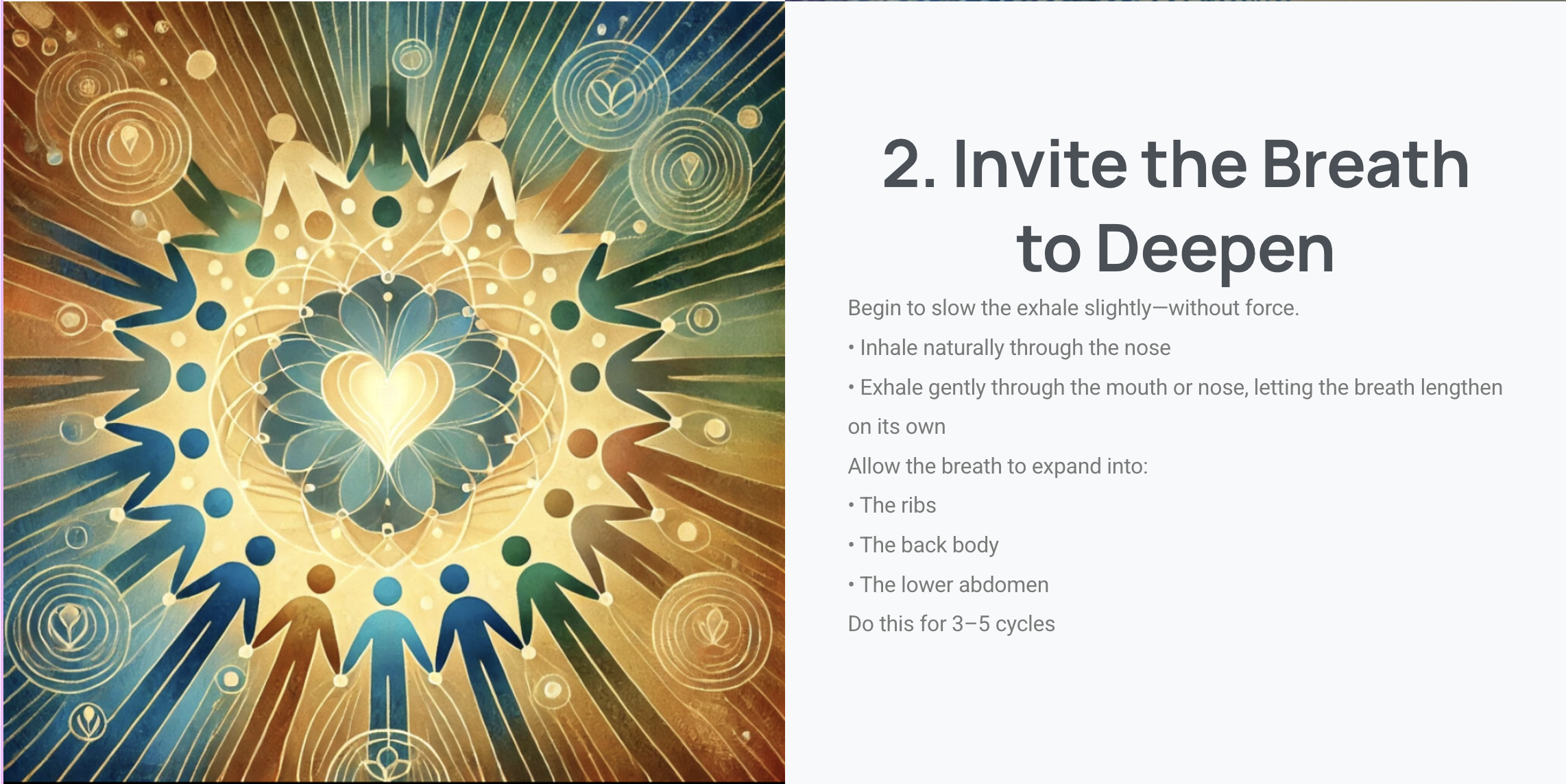
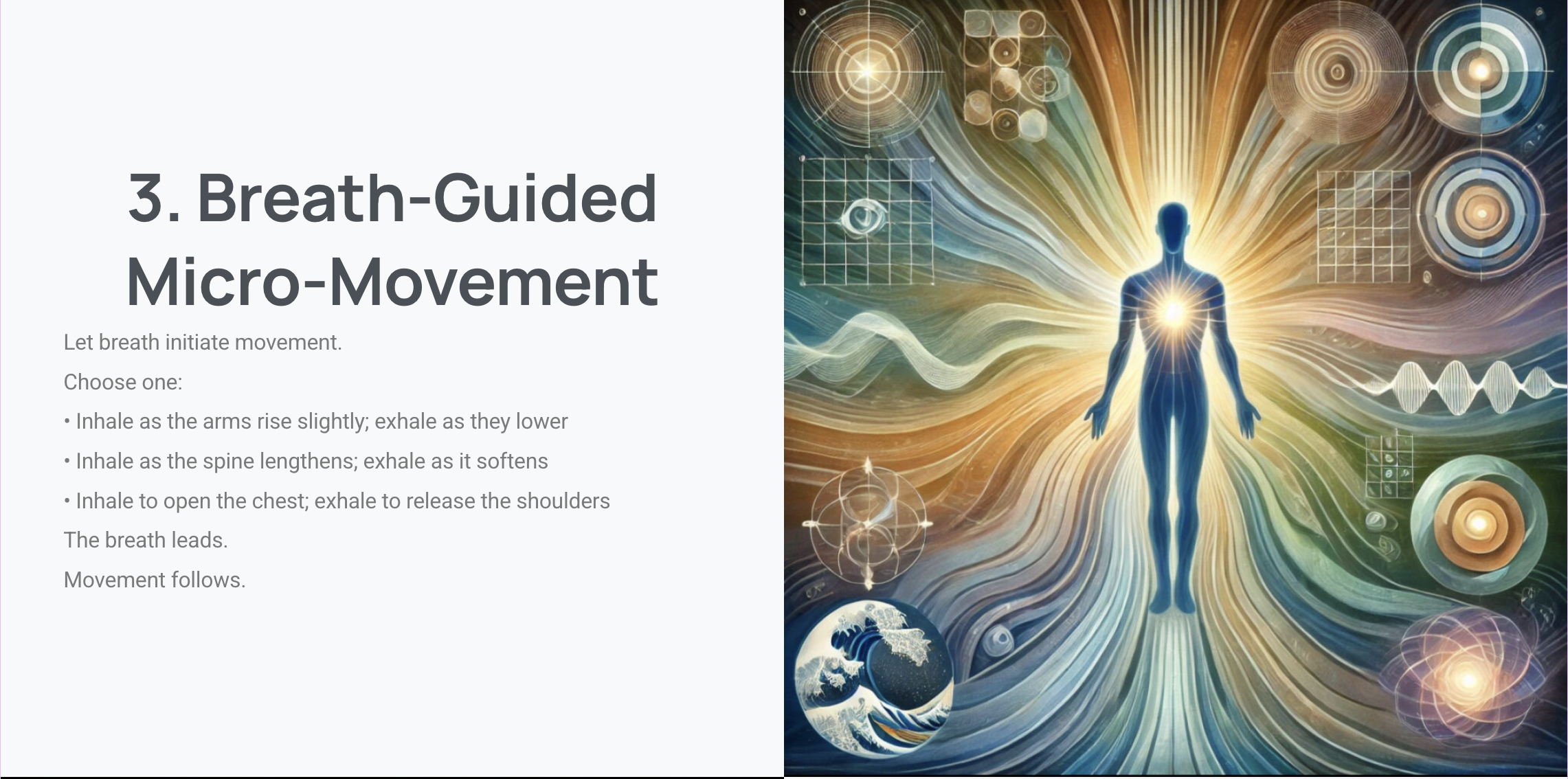
Breath as the Bridge — A Recalibration Practice Purpose: To use breath as the connecting force between awareness and action—supporting regulation, emotional release, and clear response without force or overthinking. This practice is especially supportive when you feel: • Fatigued or drained • Overwhelmed or scattered • Emotionally activated without clarity • Aware that something is off, but unsure how to respond


When to Use Which Breath A Practical Guide to Breath Selection
Breath is not one-size-fits-all. Different states require different responses. The goal is not intensity. The goal is appropriateness. Below is a simple reference guide to help you match breath to the moment.
1. Fatigue or Low Energy Use:

2. Overwhelm or Emotional Agitation Use:

3. Anxiety or Racing Thoughts Use:

4. Emotional Release Without Story Use:

5. Mental Fog or Disconnection Use:

Choosing Wisely
The most effective breath is the one that matches your current state. If you feel: Drained → Build rhythm Agitated → Extend exhale Scattered → Equalize Heavy with emotion → Release gently Breath does not fix the moment. It prepares you to respond to it.
Integration Reminder
Do not overcomplicate breath. Match it. Include it. Let it guide what comes next.
🤝 Gratitude
With Appreciation to Our Patrons & Supporters Meta-Balancing Monthly exists because of the quiet, consistent support of individuals and partners who believe in embodied learning, personal responsibility, and accessible wisdom. We offer our sincere gratitude to: • Patrons who contribute toward publication, placement, and continuity • Supporters who share these works within their communities • Bookstore partners who provide space for reflection and discovery • Readers who practice, return, and live what they encounter Your support helps these teachings remain grounded in real life—on shelves, in conversations, and in daily practice. Each contribution, whether visible or unseen, strengthens the foundation that allows this work to continue with integrity and care. We recognize that support takes many forms: • Financial • Relational • Energetic • Intentional All are valued. Thank you for helping cultivate a field where balance, responsibility, and embodiment can grow—locally and beyond. With respect and appreciation, Meta-Healing Balancing Center Dr. J. Emanuel Hodge