Grounding & Stabilization
Rooted Presence in Unstable Times

Life does not wait until we are ready.
Challenge arrives whether we are prepared or not.
What changes everything is not the absence of difficulty, but the quality of our grounded presence within it.Instability is not new. We are always being met—by demands, interruptions, emotional pulls, physical strain. These moments can be experienced as adversity, or they can be received as information. The body, in particular, is always communicating when something needs attention.
Pain, discomfort, and irritation are often misunderstood. They are not punishments. They are signals.
I once read that the average person perceives only a portion of the pain their body is actually experiencing. Whether that percentage is exact or not, the principle stands: much of what we endure is muted until it becomes impossible to ignore. When sensation finally rises, it is asking us to listen, not panic.
Stability begins with attention.
Discomfort is not a failure—it is a request.

Listening to the Signal Before Forcing the Body
I’ve learned, again and again, that small misalignments create loud consequences when ignored.
At one point, I began experiencing sharp pain behind my knee that traveled down the leg. It was persistent and specific. Rather than suppressing it or pushing through, I paused and assessed.
My hips felt stable. My movement patterns hadn’t changed. The pain kept returning.
The source turned out to be simple: the boots I was wearing were subtly throwing my body out of alignment. Once I removed them and stabilized myself, the pain eased. The solution wasn’t dramatic—it was attentive.
Another time, I noticed recurring heel pain while driving. When I slowed down and observed my body honestly, I realized my foot placement on the pedal was forcing my heel inward. A small adjustment—repositioning my foot—resolved something that had felt mysterious and frustrating.
These are minor examples, but they point to a larger truth:
If we pause long enough to assess what we’re doing—how we’re standing, walking, sitting, breathing—we often find that the body is already offering the correction.

What you notice, you can adjust.
Stabilization Through Awareness, Breath, and Placement
In The Healing Symphony, the practices of Awareness, Breath, Positioning, Movement, and Hydration exist for moments exactly like these.
They are not meant to fix us.
They are meant to reorient us.
Stabilization is rarely about doing more. It’s about doing less—with greater clarity.
Breath steadies sensation.
Positioning restores structure.
Movement redistributes load.
Hydration supports recovery.
In Embodied Meditation Practices, these same principles appear as simple ways of meeting the body where it is, rather than reacting against it. Embodiment is not about escape—it is about staying present long enough to respond intelligently.
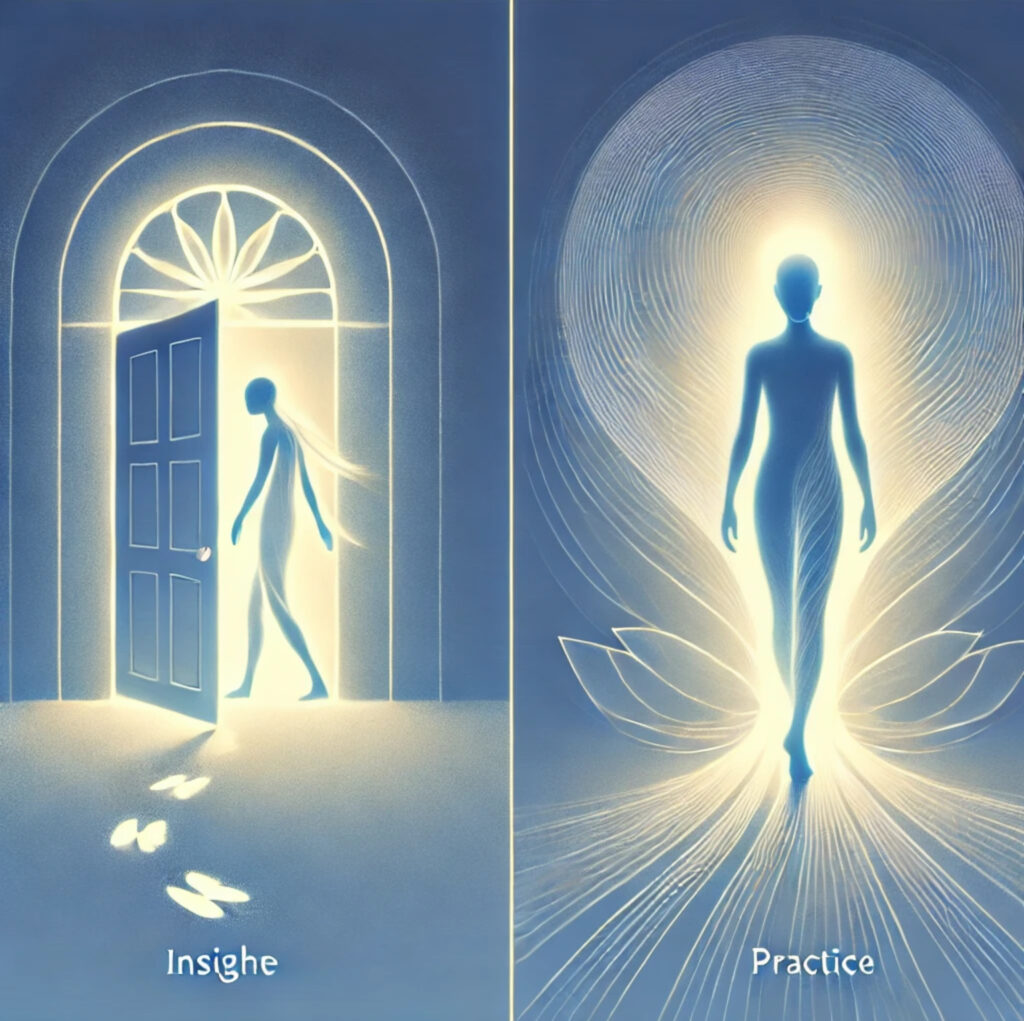
“Insight opens the door. Practice teaches the body how to walk through it.”
Nervous System Regulation Through Simple Daily Rituals
Stability is built through small, repeatable actions.
Raising your arms overhead when you wake up.
Rolling the shoulders back to reclaim upright posture.
Twisting gently before standing.
Rolling the ankles before placing weight on them.
As people age, many stop performing these basic movements—not because they are unnecessary, but because they’ve become unfamiliar. Yet these are some of the most vital gestures for maintaining circulation, joint health, and nervous system regulation.
Daily rituals don’t need to be elaborate:
• Stretching in bed before rising
• Sitting and breathing before engaging the day
• Reciting a short prayer or affirmation
• Letting breath guide motion rather than forcing movement
These practices set tone. They stabilize internal rhythm before external demands arrive.

Consistency creates safety in the nervous system.
Stability Is a Practice, Not a Personality Trait
Stability is not something you “are.”
It is something you do—again and again.
I was reminded of this recently while wearing another pair of boots—this time with smooth soles. I noticed myself slipping slightly while walking. Without panic, my body responded automatically: knees softened, toes adjusted, weight redistributed. The movement slowed. Balance returned.
The same principle applies everywhere:
• When stepping out of a vehicle
• When encountering uneven ground
• When sensations arise unexpectedly
Stability asks us to slow down, reassess, and proceed deliberately.
Breath plays a central role here. It helps us meet discomfort without freezing. It allows us to soften tension, redistribute force, and regain alignment.
With practice, this becomes second nature—not because life becomes easier, but because response becomes wiser.
Presence is the ground from which choice emerges.

Embodiment vs. Avoidance: Learning to Stay
Avoidance often looks like distraction, blame, or dissociation.
Embodiment looks like staying present long enough to respond.
I was reminded of this during a conversation with someone facing significant life challenges. His circumstances were difficult—there was no denying that. But what stood out was how quickly responsibility was projected outward.
Compassion does not require denial of personal agency.
We all face challenges—some profound, some subtle. What shapes our lives is not the difficulty itself, but how we relate to it. Thought patterns, posture, breath, and action all matter.
Embodiment is choosing to stay with what is, without surrendering responsibility or becoming hardened.
As the old wisdom reminds us:
Accept what you cannot change.
Act where you can.
And learn to tell the difference

Integration Reminder
Grounding is not passive.
Stability is not static.
They are cultivated through attention, breath, placement, and response.
When you listen to the body and respond early, life does not need to shout
A Gentle Invitation
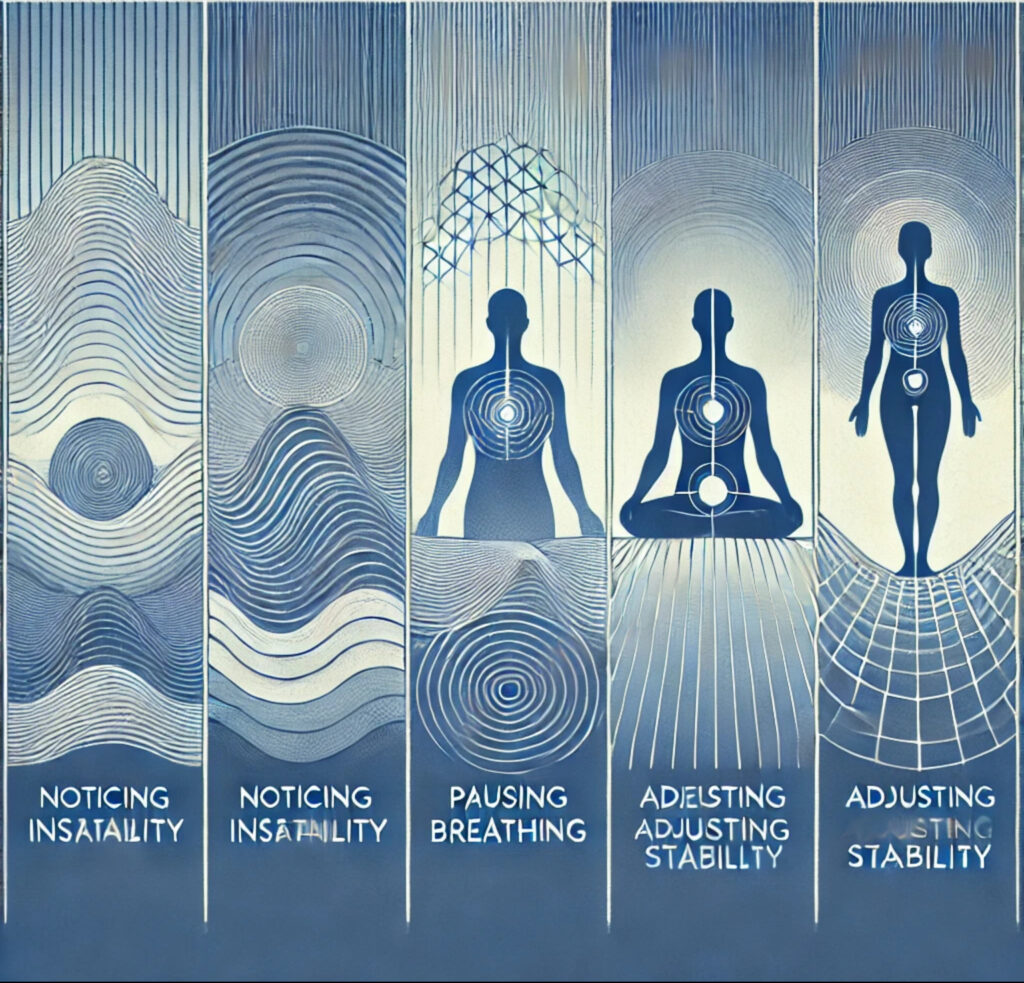
This month, notice one moment of instability—physical, emotional, or situational—and pause before reacting.
Breathe.
Adjust.
Proceed.
Stability begins there.
— Dr. J. Emanuel Hodge
Meta-Healing Balancing Center

🧘🏽♂️ Practice of the Month
Grounding Through Placement & Breath
Purpose:
To restore stability when the body, mind, or environment feels unsettled—using attention, breath, and simple adjustment rather than force.
This practice is especially supportive during moments of:
• Physical discomfort or irritation
• Emotional agitation
• Feeling rushed, unsteady, or reactive
• Transition (standing up, walking, driving, changing environments
Awareness reveals choice.
The Practice (3–7 Minutes)
- Pause & Place
Wherever you are, pause briefly.
• Notice how your feet are making contact with the ground
• Observe weight distribution (even / uneven, forward / back, inside / outside edges)
• Without judgment, let the body register what’s actually happening
Stability begins with honest placement.
2. Breath to Settle Sensation
Take 3 slow breaths:
• Inhale through the nose, allowing the breath to expand the ribs and back
• Exhale gently through the mouth, letting the body soften downward
Do not force depth. Let breath organize sensation.


3. Micro-Adjustment
Make one small adjustment based on what you noticed:
• Reposition your feet
• Soften the knees
• Roll the shoulders back and down
• Align the head over the spine
The adjustment should feel supportive, not corrective.
Breath changes state faster than thought.

4. Gentle Movement Reset
Choose one:
• Slowly raise the arms overhead on an inhale, lower on an exhale
• Twist gently side to side while keeping the chest lifted
• Wiggle or shake lightly through the legs or torso
Let movement redistribute tension.
You don’t practice to escape life—you practice to meet it.
5. Proceed With Awareness
Resume what you were doing—but slightly slower, slightly more present.
Notice whether stability has returned.
Integration Cue
Use this practice:
• When discomfort first appears
(don’t wait)
• When something feels “off” but unclear
• As a daily reset before activity

What you apply becomes yours.
🤝 Gratitude
With Appreciation to Our Patrons & Supporters
Meta-Balancing Monthly exists because of the quiet, consistent support of individuals and partners who believe in embodied learning, personal responsibility, and accessible wisdom.
We offer our sincere gratitude to:
• Patrons who contribute toward publication, placement, and continuity
• Supporters who share these works within their communities
• Bookstore partners who provide space for reflection and discovery
• Readers who practice, return, and live what they encounter
Your support helps these teachings remain grounded in real life—on shelves, in conversations, and in daily practice.
Each contribution, whether visible or unseen, strengthens the foundation that allows this work to continue with integrity and care. We recognize that support takes many forms:
• Financial
• Relational
• Energetic
• Intentional
All are valued.
Thank you for helping cultivate a field where balance, responsibility, and embodiment can grow—locally and beyond.
With respect and appreciation,
Meta-Healing Balancing Center
Dr. J. Emanuel Hodge
Meta-Balancing Monthly is a periodic field note on embodied practice, integration, and living wisdom.